Find Portable Concrete Cable Protector Elbow for Roads, Parking, Tunnels
Explore 30 portable concrete cable protector elbow options to compare specifications, materials, and load capacities. This guide helps buyers evaluate products for railway, parking, and road applications to ensure safe cable management; compare the available evidence and request quotations based on your requirements.
Key considerations
Products List




Comprehensive Sourcing Guide
Portable Concrete Cable Protector Elbow Sourcing Guide
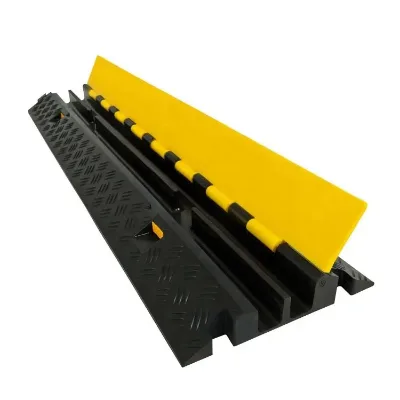
Portable cable protector elbows are directional fittings that join straight cable ramp sections at corners, allowing temporary cable runs to turn safely without exposing cables or creating trip hazards. In procurement terms, the "portable" and "elbow" descriptors matter as much as the protector body: buyers should confirm the piece is designed as a standalone corner module with integrated connectors rather than assuming any ramp line includes matching elbows. Listings observed in this category come from manufacturers and trading companies in China, including suppliers based in Hubei, with models such as JW-CP-001A, JW-CP-00B, JW-CP-01, and JW-CP-002 appearing alongside 1–5 channel ramp systems.
This guide is written for project buyers, event contractors, and infrastructure managers who need corner pieces compatible with existing ramp stock. Because elbows must mate with the straight sections already in service, the central sourcing decision is dimensional and material compatibility, not price alone. Each section below sets out what to verify before committing to a purchase order, from channel geometry through compliance documentation and long-term supplier performance.
Product Scope and Observed Listing Signals
Listed products in this segment are predominantly rubber or hybrid rubber-and-plastic cable ramps and corner modules, marketed for railway, parking, tunnel, and road applications. Observed listings describe 1-channel systems with channel sizes such as 89×35mm and 30×35mm, base sizes around 1000×245×45mm to 1000×250×50mm, and weights ranging from roughly 1.25kg for lightweight covers to about 7kg for heavier rubber bodies. Colour options commonly appear as black/yellow, black/red, and red-and-yellow, with yellow-only covers also listed. Weight capacity figures cited in listings include 15 and 20 tons.
Buyers should read these signals as observations about the listing pool, not guarantees that every listed elbow satisfies them. Brand names such as Jackwin appear, packaging ranges from woven bags and standard cartons to pallets and flight cases, and several listings state customization availability, sample availability, and OEM support. Trading-company status is declared on some listings, which affects who controls tooling and quality. Use these signals to shortlist, then verify each attribute directly with the prospective supplier.
Technical Specifications to Verify
The first specification to pin down is channel size and channel count. Since elbows must interlock with your existing straight sections, request dimensional drawings showing channel width, height, base footprint, and connector geometry, and compare them against models in your stock. Listings in this category reference 1–5 channel configurations and specific channel sizes, so an elbow quoted as "compatible" should be confirmed against actual mating dimensions. Also verify body and lid materials: several listings describe rubber bodies with plastic covers, which affects flexibility, weight, and outdoor durability differently from all-rubber or all-plastic construction.
Second, verify load rating and physical handling characteristics. Observed listings cite weight capacities of 15 and 20 tons and unit weights between roughly 1.25kg and 7kg, but buyers should ask which axle-load or static-load test method produced those figures rather than accepting the numbers at face value. For portable use, confirm hinge or lid design, lifting features, and whether the elbow connects to straight sections with dovetails, bolts, or other hardware. Ask for material data on UV resistance and rubber hardness to judge suitability for your deployment environment.
Compliance and Safety Documentation
Certification claims in the observed listings include CE on some products, and a broader set of marks—CE, ISO, FCC, MUTCD, ASTM, and AS/NZS—appears on others. Buyers should treat these as claims to be evidenced, not facts. Request the actual certificates, confirm they name the specific model you are purchasing, check validity dates and the issuing body, and verify which testing scope the certificate covers, since a certificate for a straight ramp section does not automatically extend to elbow modules in the same series.
Beyond certificates, request documentation that supports safe deployment. For products used near roadways or pedestrian areas, ask how the supplier demonstrates visibility and slip performance of the black/yellow or red/yellow cover surfaces, and whether any recognized test reports back those characteristics. If you operate in markets with specific regulatory expectations, state them in your enquiry and ask the supplier to confirm conformance in writing. A quality-oriented supplier should provide material declarations, dimensional inspection reports, and packaging specifications as part of the standard documentation package before shipment.
Cost Drivers and Commercial Terms
Price variation across observed listings is wide—the category shows listed prices from nominal sample-level figures up to around $52—so the practical task is understanding what drives the spread. Expect cost to rise with channel count, load rating, material quality, and colour complexity such as two-tone covers with reflective inserts. An elbow with a heavier rubber body, reinforced plastic lid, and multi-channel layout will sit well above a single-channel lightweight unit. Tooling or mould charges may apply for customized connector geometry or branding.
Commercial terms to settle before ordering include MOQ, packaging, and sample policy. Observed listings state MOQs ranging from 5 to 5000 pieces with common figures of 50 and 100 pieces, packaging in woven bags, cartons, pallets, or flight cases, and sample availability on several products. Negotiate whether sample costs are credited against the bulk order, confirm what "standard cartons" means in carton count and gross weight for freight calculation, and agree Incoterms, payment terms, and warranty—some listings cite a 3-year warranty—in the proforma invoice rather than after production.
Supplier Qualification and Quality Control
Start supplier qualification by distinguishing manufacturers from trading companies. Some listings declare trading-company status explicitly, which is legitimate but changes the quality conversation: the trading entity, not a factory, controls inspection and corrective action. Ask for the production entity's identity, factory audit reports or video walkthroughs, and evidence of in-house moulding and quality equipment. For a fitment-critical product like an elbow, confirm the supplier holds the tooling for your ramp series or has a defined arrangement with whoever does.
Build a simple pre-shipment quality gate into your contract. Key checkpoints include dimensional inspection of channel size and connector geometry against approved drawings, material verification for the rubber body and plastic cover, colour and marking inspection, weight check, and assembly fit testing of an elbow against straight sections from the same production batch. Request an inspection report and, for first orders, consider third-party inspection or a retained sample set. Also verify how defects are handled: agreed AQL levels, rework or replacement terms, and responsibility for freight on rejected goods should all be documented.
Long-Term Procurement Checks
Long-run value with cable protector elbows depends on continuity: the module you buy today must still fit ramp sections purchased years later. Confirm the supplier's commitment to model continuity—models like JW-CP-001A and JW-CP-002 should remain available or have declared successors—and ask whether tooling is retained so replacement orders match original dimensions. Lock specifications into a controlled drawing referenced on every purchase order, and record batch numbers so future orders can be traced. Reorder lead times and stock-holding arrangements deserve early attention.
Ongoing performance checks should combine field feedback with periodic supplier review. Track in-service issues such as lid cracking, connector wear, colour fading, or deformation under traffic, and feed defect data back into supplier scorecards. Re-verify certificates at renewal dates, confirm material or process changes are notified before shipment, and reassess load ratings if your application shifts toward heavier vehicles. Buyers with global distribution should also confirm the supplier supports OEM labelling and packaging consistently across reorders, since several listings advertise OEM capability that should be validated in practice, not assumed from the listing text.
FAQs
What materials are used for portable concrete cable protectors?
The products are constructed from rubber and plastic materials. Some units feature a rubber body with a plastic cover to ensure durability. This combination provides flexibility and strength for heavy-duty applications in various environments.
Can I get samples of the cable protector before ordering?
Samples can be available for potential buyers to evaluate product quality. This allows you to verify specifications like color and dimensions before committing to a larger purchase order for your specific project needs.
Which certifications do these cable protectors hold?
The products hold CE, ISO, FCC, MUTCD, ASTM, and AS/NZS certifications. These standards ensure compliance with international safety and quality requirements for use in railway, parking, and road applications globally.
What is the minimum order quantity for these items?
The minimum order quantity ranges from 50 to 5000 pieces depending on the specific model. Some listings indicate a standard MOQ of 50 pieces, while others may require higher volumes for custom configurations.
How are the cable protectors packaged for shipping?
Packaging options include standard cartons, woven bags, or flight cases. Some models are packed as two pieces per carton or in woven bags to ensure safe transport and protection during international shipping logistics.
What is the weight capacity of the cable ramps?
The weight capacity varies by model, with some units supporting up to 20 tons. Other specifications indicate a capacity of 15 tons, ensuring they can handle heavy vehicles in parking and road applications safely.
Are customization options available for the cable protectors?
Customization is available to meet specific project requirements. Buyers can request tailored dimensions, colors like black and yellow, or specific channel sizes to fit their unique infrastructure needs effectively.